

- Rampop II
- Member
 Offline
Re: The Missing Movie Files
Recovered:
As Above, So Below (1973)

Produced by the Performing Arts Society of Los Angeles (PASLA), director Larry Clark’s As Above, So Below was an independent, low-budget 16mm production belonging to the "L.A. Rebellion" film movement, a group of African–American filmmakers at UCLA (including Charles Burnett and Julie Dash) whose work was largely marginalized by the film industry and existed mostly in archives until recent preservation efforts.
As Above, So Below was recovered in 2025 by the UCLA Library Film and Television Archive, which now manages its digital presentation.The film depicts an organized Black Underground plotting a revolution against the United States. Its militant stance against American imperialism and systemic corruption made it difficult to program or broadcast during the era of its release.
Watch As Above, So Below HERE at rarefilmm.com.
More info:
Collection - LA Rebellion, UCLA Library Film and Television Archive
A Beginner's Guide to LA Rebellion, Cinema Waves Blog
LA Rebellion, Wikipedia entry
Last edited by Rampop II (2/01/2026 4:58 am)
- Rampop II
- Member
Offline
Re: The Missing Movie Files
Never Distributed:
The Cabinet of Dr. Ramirez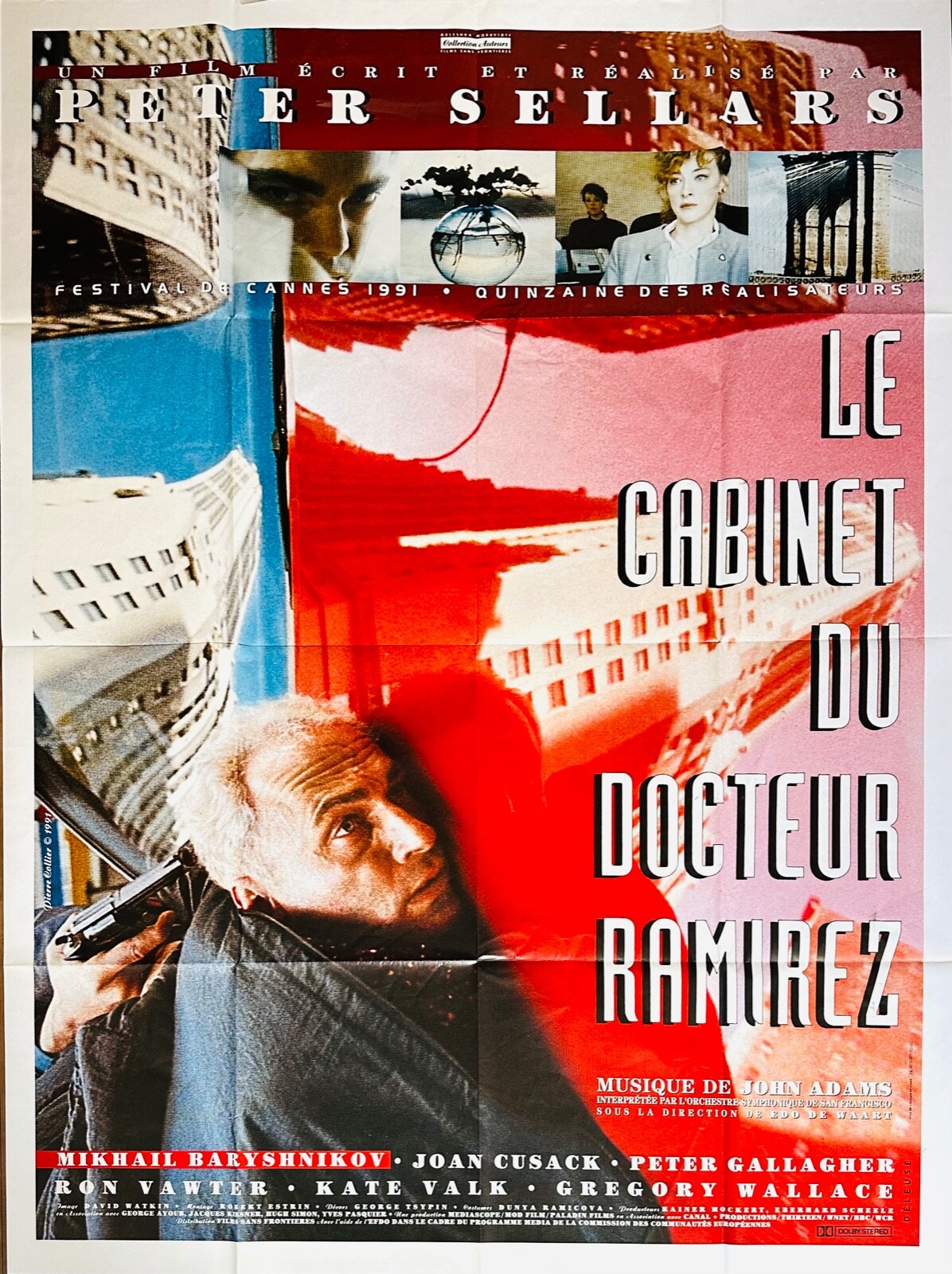
Let us now turn our attention from the merely out–of print, and back to more deeply–buried treasures.
The experimental silent film directed by Peter Sellars, starring Peter Gallagher, Joan Cusack and Mikhail Baryshnikov, with credits including award–winning cinematography wizard David "Wendy” Watkin (Out of Africa), David Lynch as executive producer (though sources indicate Lynch only lent his name to the production), and a score by composer John Adams (described as "brooding" and "melodramatic"), The Cabinet of Dr. Ramirez premiered at Cannes in 1991, was then re–worked for its only North American screening at Sundance the following year, and then, that was it. In spite of the creators’ hopes, The Cabinet of Dr. Ramirez was never picked up for distribution. Its only other official presentations have been a few broadcasts on PBS. Fan uploads from old VHS recordings can be found on YouTube, otherwise, we can only imagine what shadows wherein lonely cans containing possibly pristine reels of The Cabinet of Dr. Ramirez remain stashed away from the public eye.
Let’s enjoy some blurbs from the time, the first from Peter Catalano's 1990 article for the LA Times published prior to the film's completion, after Catalano’s having spent time on–set during shooting,
Sellars' First Reel : The Director Shoots a Silent Movie With Baryshnikov and Cusack. But Even Sellars Doesn't Know How It Will End.
Everyone seems to be enjoying himself. The budget is only $2.5 million -- this is a silent film, albeit in color and with a John Adams score -- and so the actors and crew are in it strictly for artistic reasons; some deliberately delayed other projects just to do this production and the union cut a deal with the line producer Charles Carroll to work below customary rates.
But for all the artistry, don't ask for the film's plot or resolution. This particular day they're shooting three endings. Sellars says he will pick the ending he wants "once I figure out what the rest of the film means."
"Ramirez" started out with the usual Sellars' update and a new mise en scene in New York City, the kind of things he usually does with his operas. But in the course of filming, almost no semblances to the original film was retained. "The film has taken on a life of its own," Sellars says.
Maybe not since the rambling '50s cult film "Beat the Devil," in which Humphrey Bogart, Peter Lorre and Robert Morley romped across the Mediterranean, has a script written itself on a daily, sometimes hourly basis in front of the camera.
Gallagher--who has worked with Mike Nichols and Robert Altman, among others, also likes the way Sellars works. "Its very, very exciting to be doing something unordinary. It is amazing how much effort is put in on this set--unlike other jobs--to keep it unordinary. It feels like an experiment that I'm happily a part of."
"I never rehearse [Sellars said]. I hardly say anything to the actors. What I always do is set the scene very quickly and just shoot it. And usually I print the first take," he says.
Sometimes Sellars will film a second take just to be sure. But, he says: "When we look at the dailies, the second take is nothing. Because by then the actors know what they're doing. And what's wonderful is to have the camera turning at the moment of discovery. What is caught on film is not somebody who has figured out how to react to something already, but the moment where the reaction is absolutely fresh and new, as occurring for the first time ever. And those moments of realization, those moments of encounter and confrontation are stunning, and one of the thrills of doing films.
"What's wonderful in film is there's actually a camera there at the first moment of discovery. You don't have to re-create it; you have it. So I try to get the camera rolling as quickly as possible and be a participant in the first rehearsal with the actors. And then you get something that's unpremeditated and genuinely filled with life."
Catalano, P. (1990, December 13). Sellars' First Reel : The Director Shoots a Silent Movie With Baryshnikov and Cusack. But Even Sellars Doesn't Know How It Will End. LA Times.
I regret I've been unable to track down any published reviews following the film's debut at Cannes, but here are some from stateside in response to its screening at Sundance the following year, the first from Caryn James of the New York Times, who in 1992 called it "Peter Sellars’s brilliant and relentlessly uncommercial silent movie that was universally loathed when it was shown at Cannes in 1991."
Though Dr Ramirez has only the semblance of a plot, it has the resonance of poetry and the irresistible allure of a grand, tragic ballet. Mr. Sellars translates eerily expressionistic camera angles into richly colored views of the Wall Street area.
People trickled out of the theater throughout the 90–minute film, but Mr. Sellars said later that this was nothing like the steady stream that walked out at Cannes, where the film was 20 minutes longer and the pace much slower.
“Most Americans have been trained to think they don’t get films like this," Sellars said. I just want to say, ‘Relax! You’re getting it!’”
“What’s the plot? I don’t know. Every time I see it there can be another plot.”
James, C. (1992, January 23). At the Sundance Film Festival, Art and Commerce Square Off. New York Times, 15.
When reading Lewis Segal's review for the LA times from the following year, bear in mind that the term "wag" at the time was slang for someone who is clever and amusing, particularly in their speech, when he wrote, "Peter Sellars is such a wag.”
“This is a movie about most of your life, when you’re not saying anything,” Sellars says, but what we see are Gallagher and Cusack making ESP phone calls (no talking), sleeping with the homeless, being murdered and then reappearing or waiting while maintenance crews sponge and scrub away pools of blood from around the office video display terminals.
To brighten the unreality, “Ramirez” uses John Adams’ brooding “Die Harmindielehre” as accompaniment, though when the action grows especially melodramatic, it resorts to the ritual chants of Tibetan monks seeking salvation — Sellars’ irony at its most puckish.
Segal, L. (1993, April 14). TV REVIEWS : A Look Into Peter Sellars’ Skewed ‘Cabinet’ : He plays puckish host tonight for his update of ‘The Cabinet of Dr. Caligari’ on PBS. LA Times.
Jumping forward in time now to a very recent posthumous retrospective on David Lynch for Crooked Marquee by Zach Vasquez:
"It is a surreal satire of Reagan-era conformity, bureaucracy, and greed, Oliver Stone’s Wall Street if it were written by Franz Kafka.”
Vasquez, Z. (2026, January 14). David Lynch Presents... Crooked Marquee. Retrieved February 6, 2026, from ,were%20written%20by%20Franz%20Kafka.
Even descriptions by those who revile the film only add to the curiosity. I don’t pretend that the following blurb from a neighboring blogspot deserves equal airtime here, but maybe you can guess why I’m including it: Published over 20 years later, it was reportedly 3:35 AM when the ever–so articulate Chris Hewson of Not This Time, Nayland Smith wrote:
The Cabinet of Dr. Ramirez is an experimental film with a multitude of problems, first being that it's boring! REALLY boring! In the first ten minutes, we get dramatic music over such amazing and complex visuals as...people motionlessly reading, or quietly eating lunch with a bro. This starts the film off on an immediate bad foot, and things don't improve!
Finally, what little symbolism there is in The Cabinet of Dr. Ramirez is REALLY unsubtle, like the twisted 'one way' signs, or when we see a newspaper headline saying "No problem", then police abusing the homeless.
Now let's get into the story of this movie. THERE IS NONE! This movie is about nothing. We see a string of scenes with Peter Gallagher. Some are connected, most aren't, and through the whole film, there are so many scenes that are either nonsensical, or superfluous! What's even worse is that there are apparent dreams within dreams within flashbacks within flashbacks within dreams within flashbacks within dreams within dreams! Seriously!
Hewson, C. (2015, February 13). The Cabinet of Dr. Ramirez (1991). Not This Time, Nayland Smith. Retrieved February 6, 2026, from ,its%20use%20is%20totally%20sincere!
Seriously. 😂
Doesn’t it kinda make you want to see it all that much more? I will say this, Hewson’s piece does include some nice stills from the film, including a shot of those twisted “one way” signs.
As a final curiosity, I’ll note that a couple of the reviews on Letterboxd draw comparisons to the 1982 film Koyaanisquatsi. And friends, that’s all I can scrape together for you today, I’m afraid. For those ready and willing to take the ride, those VHS recordings of The Cabinet of Dr. Ramirez on YouTube are presented as a playlist in five parts.
Last edited by Rampop II (2/07/2026 6:46 am)
- •
 Thread Starter
- Rampop II
- Member
Offline
Re: The Missing Movie Files
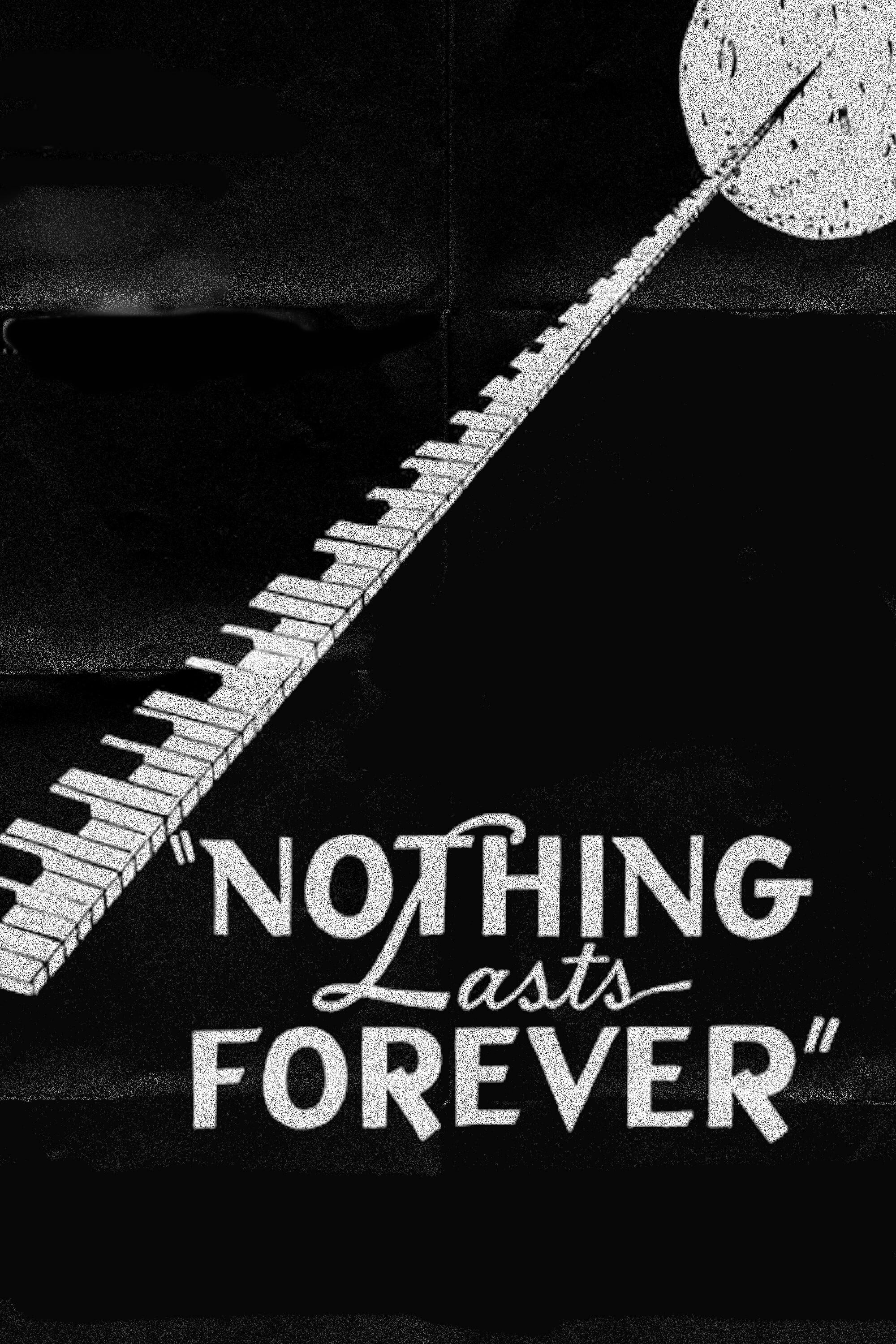
Nothing Lasts Forever (1984)
Tom Schiller, Director
Lorne Michaels, Producer
With:
Zach Galligan as Adam Beckett, the aspiring artist
Bill Murray as Ted Breughel, the "smiling, sinister" sky host on the bus to the moon
Dan Ayckroyd as Beckett’s harried and tyrannical supervisor
Mort Sahl as Uncle Mort
Lauren Tom as Eloy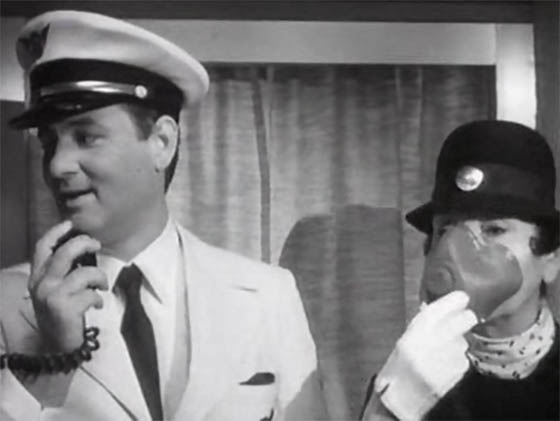
This 1984 Dystopian sci-fi comedy drama, about an aspiring artist who fails an “artistic test” and is forced to direct traffic in a totalitarian version of New York City before taking a bus to the moon, was effectively shelved by Metro-Goldwyn-Mayer due to a combination of disastrous test screenings, “unmarketable” surrealism, and primarily, "legal difficulties" regarding cleared footage.  \
\
The reported reasons the film has never had a proper release of any kind:
• Copyright and "Legal Difficulties":The film, written and directed by SNL veteran Tom Schiller, heavily incorporates clips from classic films (such as Battleship Potemkin and Un Chien Andalou) and features a mosaic-like style that has created long-standing, unresolved legal issues for home video distribution. Warner Bros., which now owns the pre-1986 MGM library, has cited these "legal difficulties" as the reason for holding back a DVD or Blu-ray release.
• Poor Initial Reception: Following a disastrous test screening in Seattle in 1982/1983, executives at MGM did not know how to market the black-and-white, surrealist film and shelved it shortly before its scheduled September 1984 release.
• Unmarketable Tone: The film was deemed too weird for mainstream audiences at the time, particularly in a year when its stars (Murray and Aykroyd) were dominating the box office with the high-energy Ghostbusters.
• Unclear Rights/Interest: Despite the cult status it has gained over the decades, the studio has not viewed the project as having enough commercial value to warrant the expense of clearing the extensive rights issues.
How it has surfaced:
• Despite being shelved, it has had rare airings on European television and once on Turner Classic Movies in 2015.
• It has appeared in unauthorized forms on YouTube but was taken down by copyright holders.
• Director Tom Schiller has facilitated private screenings of his own 35mm print at various film festivals. 
This Excellent Film Threat article from 2014 shares numerous noteworthy details, including the fact that Bill Murray successfully lobbied for it to be included in a retrospective of his work at Brooklyn’s BAM Cinematek.
More reading:
The Vintage News, February 2022: The Bill Murray and Dan Aykroyd Moon Movie That Was Lost In Space By MGM
Slash Film, December 2021: Why Bill Murray's Nothing Lasts Forever Never Got A Theatrical Release
Hollywood Reporter, July 2014: Lost Bill Murray Movie Leaked on YouTube
Time, July 2014: The Unreleased 1984 Oddball Nothing Lasts Forever Can Now Be Seen!!!
- •
Thread Starter- Jinnistan
- Administrator
Offline

Re: The Missing Movie Files
That's a good one, magical and sweet, but not a lot of lols. Worth noting that Tom Schiller was considered the SNL in-house cineaste, responsible for such classic B&W shorts as "La Dolce Gilda" and "Don't Look Back in Anger" with John Belushi as a dancing survivor. He also wrote most, if not all, of the original show's movie parodies, including "Citizen Kane II" where he plays "Henri".You can definitely feel this affection for old-school art-house cinema in Nothing Lasts Forever.
I watched the TCM showing, and tried to burn a copy, but onfortunately, due to fate or negligence, ended up with a copy with no sound.
I honestly don't think that all of the financial stuff, the fees and the profitibility, is a reasonable enough excuse. They could have found a way. Sure, this is not a blockbuster, but they could have sold it to HBO who would have happily put it on repeat for overnight programming. I think this is another example of the studios retaining a resentful grudge against anything so uncompromisingly whimsical, so far above their own morass of transactional metrics. In fact, they fear films like this precisely because it is fearlessly impractical.

A lot of people don't realize what's really going on. They view life as a bunch of unconnected incidents and things. They don't realize that there's this lattice of coincidence that lays on top of everything. Give you an example; show you what I mean: suppose you're thinking about a plate of shrimp. Suddenly someone'll say, like, plate, or shrimp, or plate o' shrimp out of the blue, no explanation. No point in looking for one, either. It's all part of a cosmic unconciousness.
Everybody's into weirdness right here.